Why systems should enhance not replace human relationships
The biggest misconceptions business owners have about automation and AI
How to identify where your business is wasting time on manual work
What it actually means to work through people as a leader
How to choose the right guide in a noisy AI landscape
Why customized solutions outperform one size fits all systems
Key Topics & Timestamps
[01:00] From Ministry to Marketplace
Drew shares his background:
Nearly 20 years in ministry
A focus on caring for people at scale
Transition into business during COVID
His core question never changed:
How do you impact more people with the time you have
[02:30] Systems as a Force Multiplier
Early lessons from ministry shaped his approach:
Develop people instead of doing everything yourself
Use systems to multiply impact
Think beyond individual output
This mindset translated directly into business growth.
[06:00] The Biggest Misconception About Systems
Many business owners believe:
Systems are shortcuts or an easy button
Or systems remove the human element
In reality:
Systems should make you better at serving people not replace them
[07:30] When Systems Go Wrong
Example from everyday business:
Less human interaction
Less connection
Less experience
The fear is real but avoidable.
Good systems should:
Increase human interaction
Not eliminate it
[09:00] What It Means to Work Through People
A key leadership shift:
You do not scale by doing more
You scale by developing others
Example:
One person can serve a limited number of clients
A developed team multiplies that impact
[11:00] Where Businesses Are Losing Time
Common inefficiencies:
Manual data entry
Redundant processes
Outdated workflows
Example:
Dozens of hours per week spent on tasks that could be automated
The real opportunity:
Freeing people to do higher value work
[13:00] The AI Hype Problem
What is being misunderstood:
AI will quickly fix your business
Reality:
Most business owners do not have time to learn it deeply
Most tools are not plug and play solutions
The risk:
Spending time on the wrong things
[14:30] Focus vs Overwhelm
There are thousands of possible AI use cases.
What matters:
Identifying the few that actually move your business forward
Clarity beats volume.
[15:30] Choosing the Right Guide
The market is noisy:
Courses
Consultants
Tools
Most are:
Selling one solution to everyone
The better approach:
Find someone who diagnoses before prescribing
[16:30] Why Customization Wins
Drew’s approach:
Deep business understanding
Stakeholder interviews
Tailored system design
Key idea:
No two businesses need the same solution
[18:00] The Power of Listening
A defining trait of great operators:
They listen first
Not just to processes but to:
People
Pain points
Frustrations
This is where real solutions come from.
[20:30] Lessons from Ministry
Transferable skills:
Caring for people
Developing others
Thinking in terms of multiplication
The foundation:
People first leadership scales in any environment.
[21:30] How Drew Stays Sharp
Key inputs:
Peer community
Coaching
Failure
Failure is not a setback. It is a tool for growth.
Practical Takeaways for CEOs and Leaders
Stop chasing the easy button
Audit where your team is wasting manual time
Use systems to elevate people not replace them
Focus on a few high impact automation opportunities
Choose advisors who listen before they sell
Build processes that scale people not just output
Growth does not come from more tools.
It comes from better alignment between people, process, and purpose.
About the Hosts
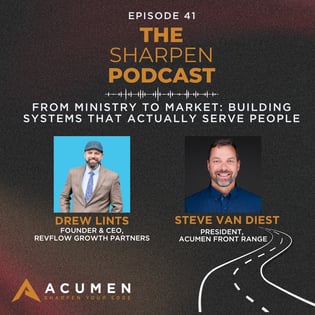
Steve Van Diest is the co-host of The Sharpen Podcast and President of the Front Range Region at Acumen, leading peer advisory teams and working directly with CEOs as a Growth Catalyst. Connect with Steve to learn more about Acumen.
About the Guest
Drew Lints is the founder of Revflow Growth Partners, where he helps businesses design customized systems and processes that improve efficiency while enhancing human connection.
To learn more about Drew and Revflow Growth Partners:
https://revflowpartners.io
Explore More
If you’re interested in learning more about Acumen or joining a peer advisory team:
https://acumenimpact.com